
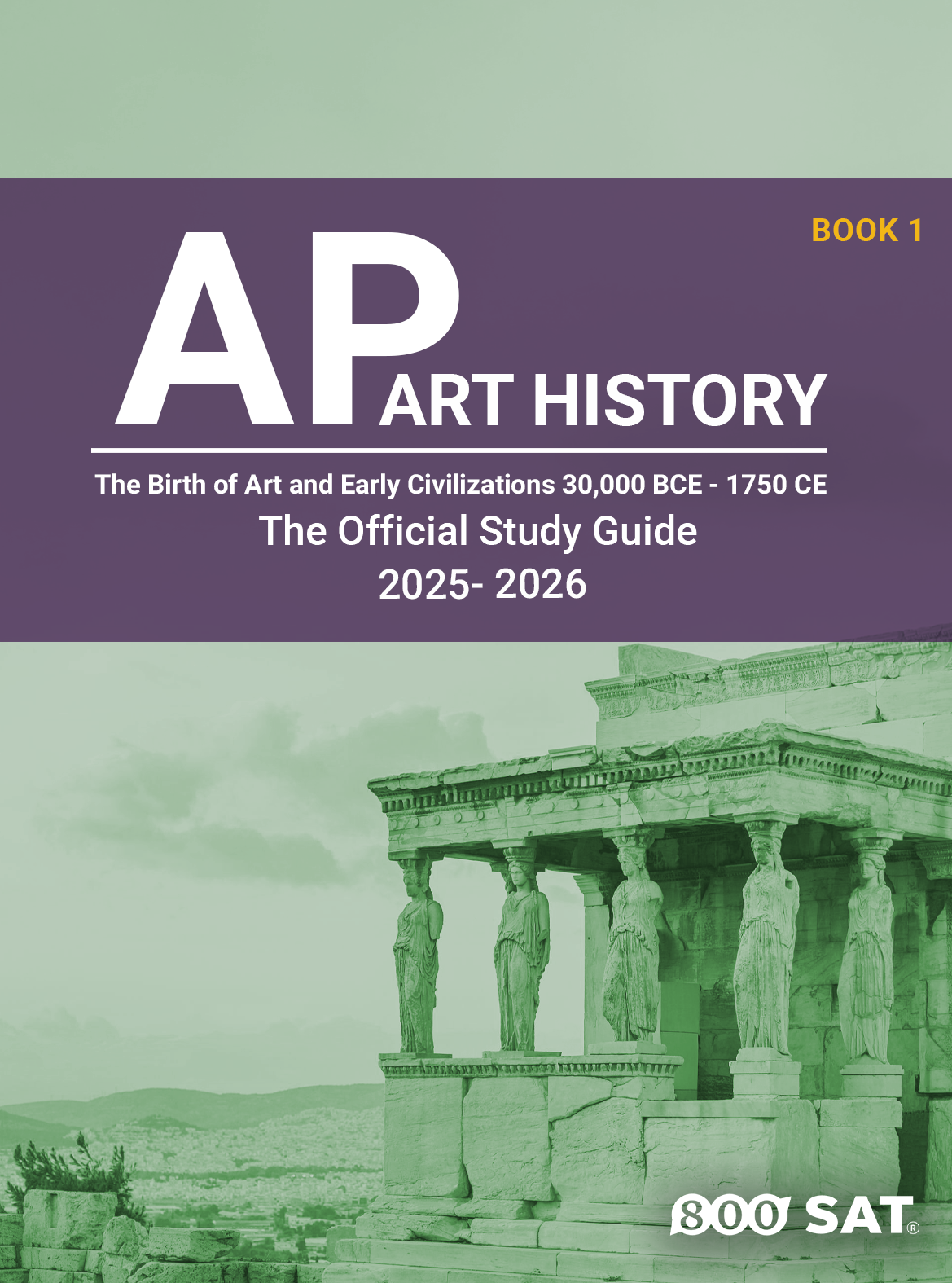
AP Art History – Book 1: The Birth of Art and Early Civilizations 30,000 BCE – 1750 CE
 Overview
The Foundations of Artistic Expression book begins the AP Art History journey by exploring how humans first began using art to communicate ideas, beliefs, and identity. Covering Global Prehistory through the Baroque and Colonial eras (30,000 BCE – 1750 CE), this book reveals how early artists shaped the foundations of architecture, sculpture, and visual storytelling across civilizations.
Students learn to interpret art not only as creative expression but also as evidence of cultural values, belief systems, and power structures that defined early societies.
Key Themes and Topics
The Birth of Art and Symbolism (Global Prehistory)
-
Early Human Creativity: Explore the first known artistic expressions in cave paintings, sculptures, and ritual objects that marked humanity’s shift toward symbolic thought.
-
Function and Meaning: Understand how prehistoric art reflected survival, fertility, spirituality, and the connection between humans and nature.
-
Architecture of Belief: Examine monumental structures like Stonehenge as early evidence of organized religion and social cooperation.
Civilization, Power, and Belief (Ancient Mediterranean)
-
Art of Empire: Study how the civilizations of Mesopotamia, Egypt, Greece, and Rome used art to project divine authority, political power, and cultural identity.
-
Innovation and Idealism: Learn about Greek naturalism, Roman realism, and the architectural advances that influenced later Western art.
-
Sacred Spaces: Analyze temples, tombs, and sculptures as reflections of belief in gods, kingship, and the afterlife.
Faith, Knowledge, and the Renaissance (Early Europe and Colonial Americas)
-
Spiritual Art in Transition: Examine how Early Christian, Byzantine, and Gothic art conveyed faith through light, symbolism, and storytelling.
-
Humanism and Realism: Understand how Renaissance artists like Leonardo da Vinci, Michelangelo, and Raphael redefined beauty, perspective, and the human figure.
-
Art of Empire and Exploration: Explore how Baroque art used drama and emotion to communicate religious fervor and how colonial art reflected both European influence and indigenous adaptation.
Skills Development
Students build essential art-historical skills that serve as the foundation for the entire AP course:
-
Visual Literacy: Learn to describe and analyze formal elements—line, color, shape, texture, and composition.
-
Cultural Contextualization: Understand how geography, religion, and politics shaped early artistic production.
-
Chronological Understanding: Develop a timeline of artistic evolution from prehistory to the Enlightenment.
-
Interpretive Thinking: Connect form, function, and meaning to the beliefs and purposes of the societies that produced them.
Assessment and Application
Students will apply what they learn through structured exercises and exam-style practice:
-
Visual Analysis Essays comparing ancient and Renaissance works
-
Artifact Investigation Activities linking prehistoric and classical forms
-
Contextual Discussion Prompts about religion, power, and innovation
-
Practice Multiple-Choice Sets covering major works and stylistic features
Course Features
- Lectures 29
- Quiz 0
- Duration 52 weeks
- Skill level All levels
- Language English
- Students 2
- Assessments Yes
- 3 Sections
- 29 Lessons
- 52 Weeks
- Unit 1: Global Prehistory (30,000–500 BCE)9
- 1.1An Introduction to Dating
- 1.2The Beginnings of Art and Symbolism
- 1.3The Beginnings of Art and Symbolism: Required Artworks
- 1.4The Human Figure in Prehistoric Art
- 1.5Function and Ritual in Prehistoric Objects
- 1.6Early Architecture: Shelters, Monuments, and Sacred Sites
- 1.7Contextualizing the Art
- 1.8Unit 1 Glossary
- 1.9Unit 1 Artworks
- Unit 2: Ancient Mediterranean (3500 BCE–300 CE)15
- 2.1An Introduction to the Near East and the Ancient Mediterranean
- 2.2Art of the Ancient Near East
- 2.3Ancient Egypt: From Pre Dynastic to Old Kingdom (c. 5000–2150 B.C.E.)
- 2.4Ancient Egypt: From the Middle-Kingdom to the Second Intermediate Period (c. 2030 – 1540 B.C.E.)
- 2.5Ancient Egypt: The New Kingdom (c. 1550–1070 B.C.E.)
- 2.6The Function of Ancient Egyptian Art
- 2.7Introduction to Ancient Greek Art
- 2.8Greek Vase Painting: Function, Technique, and Narrative
- 2.9Archaic Greek Sculpture — Kouroi and Korai
- 2.10The Classical Revolution — Idealism, Naturalism, Contrapposto
- 2.11Greek Architecture — The Orders & the Acropolis
- 2.12The Hellenistic World — Drama, Emotion, Movement
- 2.13The Function of Greek Art — Why It Was Made
- 2.14Etruscan and Roman Art: Innovation and Legacy
- 2.15The Classical Orders and Architectural Design
- Unit 3: Early Europe and Colonial Americas (200–1750 CE)5