
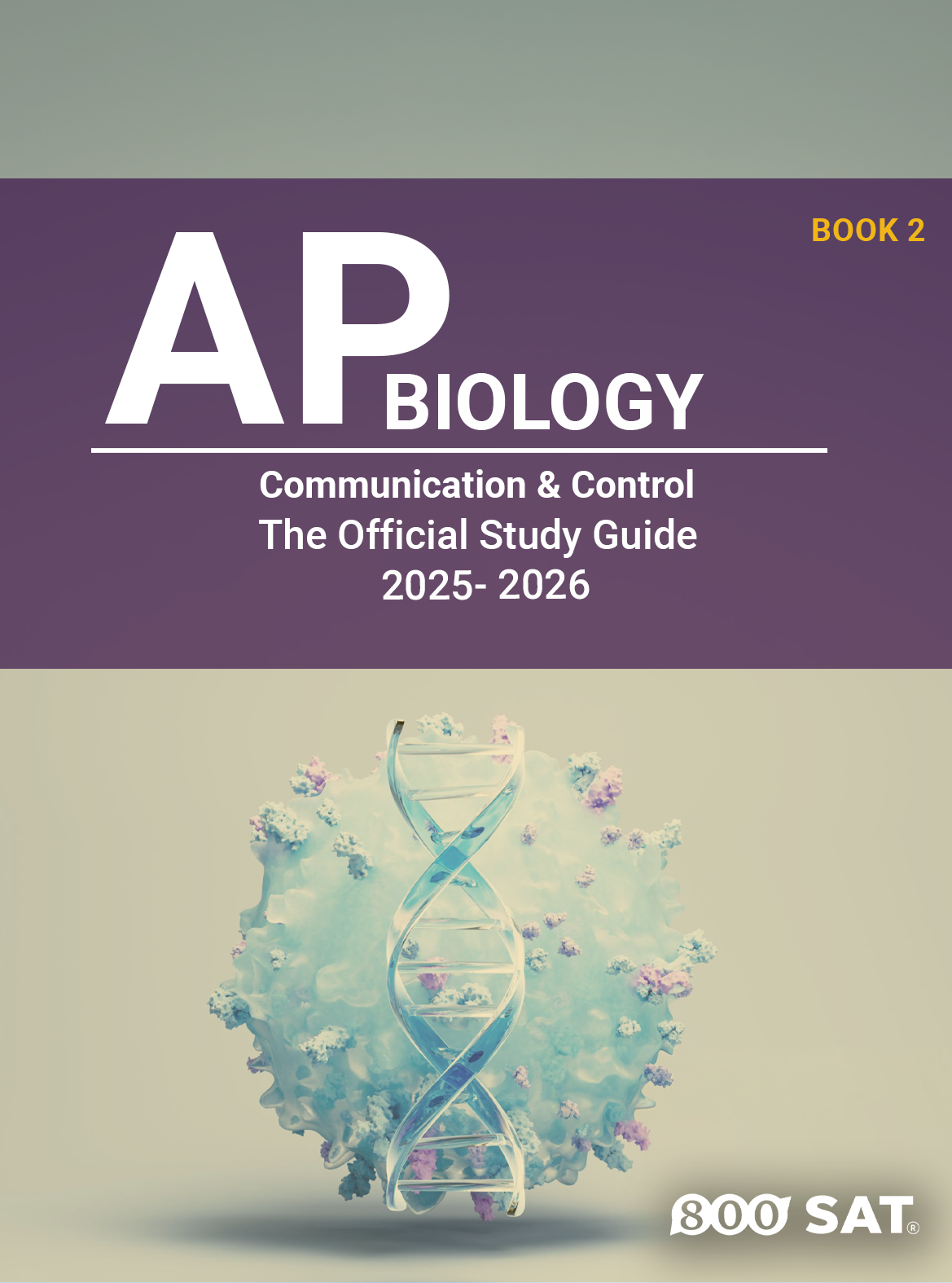
AP Biology Book 2: Communication and Control explains how living systems detect signals, transmit information, and regulate internal conditions. This book supports students as they move deeper into AP Biology. Most importantly, it focuses on how biological systems maintain balance through communication and control.
First, the book introduces cell communication. Cells use chemical signals to send and receive information. For example, ligands bind to receptors to start signal transduction pathways. As a result, cells change their activity in response to internal or external cues. Moreover, the book shows how small molecular changes lead to large cellular responses.
Next, the book examines feedback mechanisms and homeostasis. Students learn how negative feedback maintains stability. In contrast, positive feedback amplifies specific responses. Therefore, students understand how organisms regulate body temperature, blood glucose, and water balance. These ideas appear frequently in AP Biology data-analysis questions.
Then, the book moves to control systems in multicellular organisms. The nervous system allows fast and precise communication. Meanwhile, the endocrine system controls slower but long-lasting responses. Consequently, students compare speed, duration, and specificity between these systems. In addition, the book explains how organs and tissues work together to coordinate responses.
After that, the book explores plant communication and control. Plants respond to environmental signals using hormones and signaling pathways. For instance, students study tropisms and growth responses. As a result, they see that communication is essential in all living organisms, not only animals.
Throughout the book, students strengthen AP Biology science practices. For example, they analyze data, interpret diagrams, and evaluate experimental results. Moreover, AP-style examples guide students through common exam question formats. Therefore, students learn how to apply concepts instead of memorizing facts.
Overall, AP Biology Book 2: Communication and Control prepares students to explain regulation and response in biological systems. Finally, the book builds systems-level thinking and exam readiness. As a result, students gain the skills needed for advanced AP Biology topics and exam success.
Course Features
- Lectures 10
- Quizzes 3
- Duration 52 weeks
- Skill level All levels
- Language English
- Students 932
- Assessments Yes
- 3 Sections
- 10 Lessons
- 52 Weeks
- AP Biology Unit Four: Cell Communication and Cell Cycle3
- AP Biology Unit Five: Heredity5
- AP Biology Unit Six: Gene Expression and Regulation5